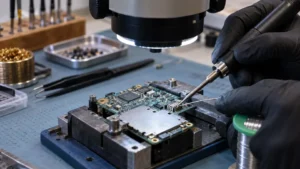
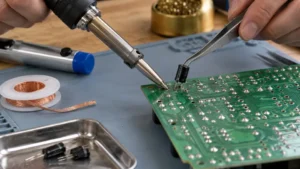
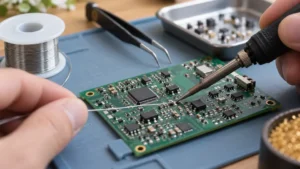
Microsoldering asks more from a soldering iron than a quick wire repair. Small pads, fine-pitch components, jumper wires, and heat-sensitive boards re…
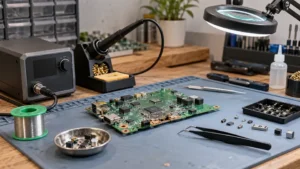
PCB repair demands more control than a basic plug-in soldering iron can usually provide. Small pads, delicate traces, through-hole joints, and heat-se…
Desoldering removes solder from a joint so a component, wire, or connector can be released without damaging the circuit board. The central challenge i…
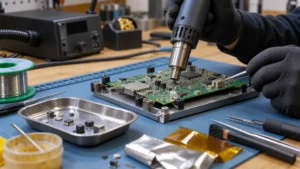
A hot air rework station for PCB repair has to do more than blow very hot air. It needs controllable temperature, adjustable airflow, useful nozzles, …
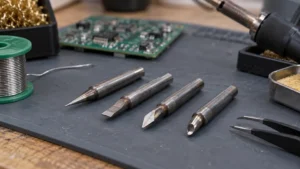
A soldering iron tip’s shape determines how much of the heated surface can touch a joint, which angles are practical, and how easily solder can be con…
Small SMD pads punish sloppy material choices. A thick solder wire can dump too much metal onto a tiny joint, while a paste with the wrong melting beh…
Small SMD pads can turn a routine repair into a sticky, smoky battle when solder refuses to wet the surface. The right flux helps remove oxidation, im…
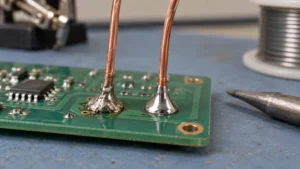
A cold solder joint forms when solder fails to wet and bond properly to the surfaces being joined. Insufficient heat is a common cause, but contaminat…
Solder paste for electronics sits at the intersection of alloy choice, heat control, application accuracy, and cleanup. A paste that reflows at 138°C …
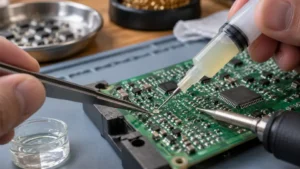
Solder paste can make a small PCB repair feel wonderfully controlled, or turn a careful rework job into a sticky, uneven mess. The right choice depend…